Why Fatigue Assessment Is Non-Negotiable for Heavy Truck Reman?
Intro
Heavy trucks do not usually fail from one single overload shock. Most structural breakdowns happen from fatigue: repeated cycles of loading, flexing and relaxation, day after day. The frame rails, welds, knuckles and suspension brackets slowly accumulate invisible damage.
Surface rust, oil leaks and strange noises are easy warning signs. Fatigue cracks stay hidden until they suddenly open under load. Basic repairs and cosmetic rebuilds ignore this risk because they cannot see it.
Genuine heavy truck reman treats fatigue assessment as a non-negotiable core step. It is not an optional extra inspection. It is the foundation that decides whether a core chassis is safe enough for a second lifecycle. Skipping it turns a reman truck into a high-risk asset for your fleet.
What Fatigue Means for Heavy-Duty Chassis Steel?
Fatigue starts when metal is bent repeatedly, even below its absolute breaking strength. Every loaded trip, every bump, every tipping cycle creates stress on welds and frame sections. Microscopic cracks begin to form at stress concentration points. These points include weld roots, sharp corrosion pits, hole edges and section transitions.
At first, the crack is tiny and closed. When the truck is empty, the metal relaxes and the crack stays shut. It will not appear during empty-yard testing or visual walkarounds. Only when payload pushes the frame into flex does the crack open and grow.
Over hundreds or thousands of cycles, a microcrack turns into a propagating fracture. This is why seemingly reliable trucks can suffer sudden frame or bracket failure mid-shift.
Why Visual Inspection Cannot Replace Fatigue Assessment?
Technicians can spot large, open cracks. But the dangerous early-stage fatigue defects are invisible to the naked eye.
A weld can look smooth and well-formed, yet contain subsurface fatigue cracks inside the weld root. A frame rail can look clean and straight, while microcracks spread under a thin layer of paint. Even experienced senior mechanics cannot reliably judge remaining fatigue life by sight.
That is the core limitation of workshop rebuilds that rely only on visual checks. They can confirm the truck is not broken right now. They cannot prove it will survive thousands more heavy load cycles.
What Fatigue Assessment Covers in Genuine Heavy Truck Reman?
Fatigue assessment combines several linked inspection activities, anchored to the core’s service history.
First, engineers review the incoming service record. They check for repeated overload, rough off-road duty, prior crash damage and frequent heavy cyclic tipping. A chassis with a history of severe cyclic loading will receive stricter scanning and more conservative limits.
Second, all structural parts are fully cleaned and stripped down to bare metal. Paint, rust scale and grime are removed so NDT methods can work reliably.
Third, targeted NDT scans are performed on high-stress zones. Frame welds, suspension mounting brackets, steering knuckles, axle housings and crossmember joints are priority areas. Ultrasonic testing and magnetic particle testing detect subsurface and surface-breaking fatigue cracks.
Fourth, dimensional and corrosion data are combined with scan results. A corrosion pit does not just thin the steel. It creates a stress riser that accelerates fatigue growth. The assessment calculates the combined effect of section loss and cyclic stress.
Finally, the outcome feeds into the certified duty envelope. If fatigue damage is found, the core is either rejected for heavy truck reman, or assigned a reduced operating limit to slow further crack growth.
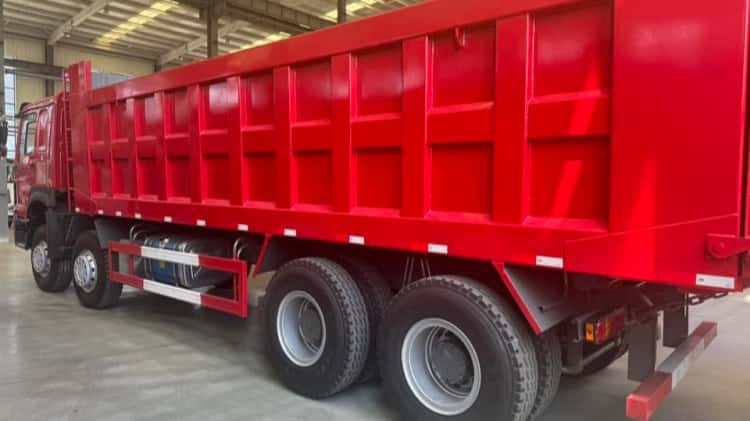
The Critical Rule: Fatigue Damage Does Not Heal
This is the key fact many casual rebuild operators ignore. Metal fatigue damage is permanent. You cannot hammer, paint, straighten or lubricate a fatigue crack away.
Once a microcrack exists, it will keep growing under cyclic load. Repair welding can sometimes be approved under tight engineering rules. But welding introduces new heat-affected zones that can become new fatigue initiation points. Genuine heavy truck reman baseline rules restrict weld repairs on critical high-stress frame sections. Borderline parts are scrapped rather than patched.
A rebuild that reuses a fatigue-damaged core only delays failure. It does not eliminate the root hazard.
How Fatigue Assessment Protects Your Fleet TCO?
Unplanned structural failure is one of the most expensive downtime events for heavy fleets.
A frame or steering component fracture under load can cause vehicle loss, site shutdown, spilled cargo and driver risk. The associated recovery, repair and penalty costs far exceed the cost of upfront fatigue screening.
Consistent fatigue assessment also stabilises residual value. When a reman truck has documented fatigue scan results, future buyers understand its remaining safe service life. Undocumented rebuilds carry unknown fatigue risk and depreciate much faster.
It also clarifies warranty boundaries. If every high-stress zone was scanned and cleared at heavy truck reman, failure analysis becomes straightforward. If a crack develops later, teams can tell whether it came from overuse outside the duty envelope or a new defect.
Common Shortcuts Cheap Rebuilds Take
Many low-cost rebuilds skip formal fatigue assessment entirely. They rely on these flawed assumptions:
- “The truck ran fine before, so it will keep running.”
- “No visible crack means no fatigue.”
- “We replaced the engine and suspension, so the chassis is safe.”
These shops may reuse cores with undetected subsurface cracks. They sell the truck at a lower price, but transfer all the fatigue risk to the fleet buyer. This is the primary reason some “reman” trucks fail unexpectedly after only a few months of site work.
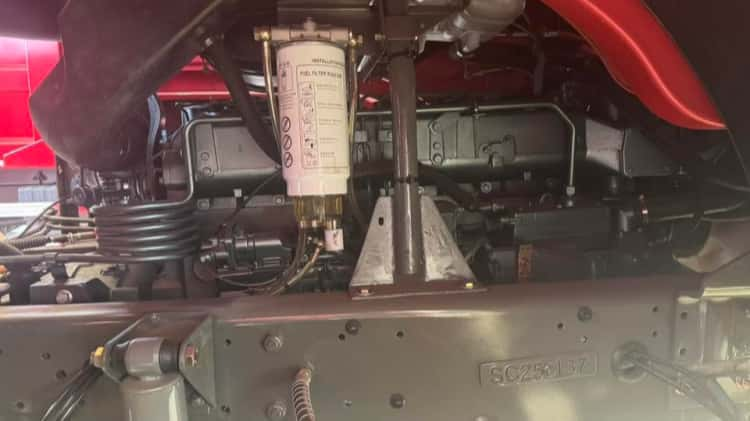
What to Ask Reman Truck Suppliers to Verify Fatigue Assessment?
When auditing reman truck suppliers, ask for proof of fatigue assessment:
- NDT scan reports for high-stress welds and structural components
- Mapping of crack indications, with pass/fail decisions referenced to the acceptance baseline
- Service history review notes for the incoming core
- Documentation linking fatigue findings to the final certified duty envelope
A genuine reman truck suppliers can point to exact scan locations and measurement results. Shops that cannot produce these records have not completed fatigue assessment.
Final Takeaway
Fatigue assessment is non-negotiable because heavy truck structural failure is driven by invisible cyclic damage. Visual checks, empty-yard testing and component replacement cannot reveal microcracks and stress risers hidden in steel.
Genuine heavy truck reman uses NDT, stress analysis and service history review to quantify fatigue risk before the asset is reset. It decides what the chassis can safely sustain in its second lifecycle, and sets the duty envelope accordingly.
If a heavy truck reman process does not include formal fatigue assessment, it is not resetting the asset’s safety margin. It is only putting a used chassis back into service, with all its accumulated fatigue risk still locked inside.