
REMAN ROAD Low Bed Trailer Remanufacturing Process
Learn the REMAN ROAD full standardized low bed trailer remanufacturing process, including gooseneck straightening, frame anti-fatigue reinforcement, platform leveling, multi-axle calibration and 72-hour ultra-heavy-load endurance testing.
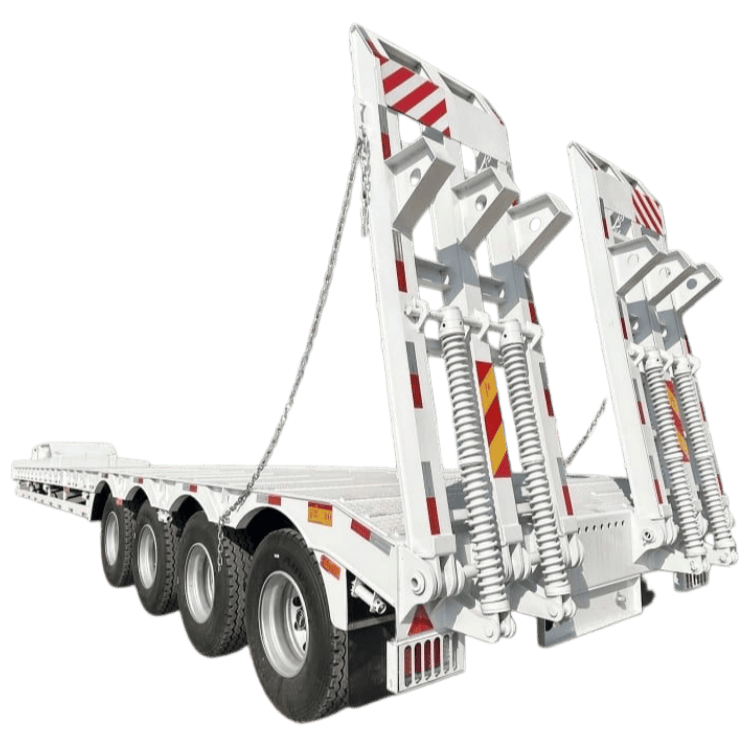
OVERVIEW
Due to full-area concentrated heavy compression and all-deck sinking stress, lowbed trailers suffer unique structural failures including overall deck subsidence, full-frame low-profile bending, full-span torsional fatigue and uniform plate depression. Simple cosmetic repainting or ordinary flatbed refurbishment cannot restore the precise low-profile geometry and full-load structural rigidity required for legal oversized haulage. Professional low bed trailer remanufacturing is an industrial-grade structural restoration process targeting full drop-deck correction, low-profile frame recovery, full-area uniform fatigue elimination and complete heavy-load chassis renewal. This article presents the full standardized lowbed trailer remanufacturing workflow, helping global buyers strictly differentiate genuine low bed remanufacturing from refurbishment.
TABLE OF CONTENTS
- Step 1: Pre-Production Lowbed Trailer Inspection & Qualification Evaluation
- Step 2: Complete Full-Trailer Disassembly & Deep Cleaning
- Step 3: Full-Span Low-Profile Frame Correction & Structural Reinforcement
- Step 4: Ultra-Low Full-Drop Deck Leveling & Heavy-Duty Restoration
- Step 5: Multi-Axle Chassis, Suspension & Braking System Reman
- Step 6: Full-Vehicle Low-Profile Anti-Corrosion & Protective Spraying
- Step 7: Full-System Synchronous Debugging & Low-Profile Fine Tuning
- Step 8: 72-Hour Full-Drop Heavy-Load Endurance Simulation Test
- Step 9: Final Full-Index Inspection, Quality Filing & Delivery
- Core Differences: Reman Low Bed Trailer VS Refurbished Lowbed Trailer
- About REMAN ROAD: Brand Position, Vision & Core Principles
RELATED ARTICLES | CLICK TO VIEW MORE
- REMAN ROAD Full Trailer Remanufacturing Process
- REMAN ROAD Tanker Trailer Remanufacturing Process
- REMAN ROAD Dump Trailer Remanufacturing Process
- REMAN ROAD Low Bed Trailer Remanufacturing Process
- REMAN ROAD Lowboy Trailer Remanufacturing Process
- REMAN ROAD Flatbed Trailer Remanufacturing Process
- REMAN ROAD Container Trailer Remanufacturing Process
- REMAN ROAD Cargo Trailer Remanufacturing Process
Step 1: Pre-Production Lowbed Trailer Inspection & Qualification Evaluation
Pre-inspection focuses entirely on lowbed-specific low-deck deformation and full-span fatigue defects, excluding all lowboy stepped transition and gooseneck detection items to ensure accurate heavy-haul qualification.
Full-Drop Frame Geometry Detection:
Precisely measure full-length main beam straightness, integral frame torsion and overall low-profile height consistency. Screen out trailers with irreversible full-span bending, distorted low-profile baseline and deep structural fatigue that fail oversized load transportation standards.
Ultra-Low Full Deck Flatness Inspection:
Adopt laser high-precision calibration to detect full-drop deck overall subsidence, long-span uneven depression, local plate warping and thickness attenuation. Generate targeted full-area leveling and structural reinforcement solutions exclusive to lowbed ultra-low decks.
Full-Span Uniform Fatigue Screening:
Focus on full-length beam joints, full-area deck stress surfaces and bottom welding seams. Inspect hidden micro-cracks and metal fatigue caused by long-term full-drop uniform heavy compression and continuous road vibration, which are typical lowbed structural defects.
Chassis Parameter Recording:
Test multi-axle full-load sharing balance, suspension uniform elasticity, braking synchronization and traction stability under ultra-low deck load conditions. Record lowbed exclusive fatigue data to formulate precise remanufacturing standards.
Step 2: Complete Full-Trailer Disassembly & Deep Cleaning
The integral full-drop low-profile structure of lowbed trailers forms enclosed beam gaps and low-level deck surfaces that easily accumulate dust, mud and rust, concealing full-span fatigue cracks and deformed welding seams. Complete layered disassembly and deep industrial cleaning are mandatory to expose all lowbed-specific structural defects.
Full Low-Profile Structure Disassembly:
Systematically disassemble ultra-low deck plates, full-span crossbeams, multi-axle running gear, heavy-duty suspension assemblies, braking systems, support legs and safety accessories. Classify all components into reusable, repairable and mandatory replacement grades for lowbed heavy-load restoration.
Low-Deck Deep Decontamination & Degreasing:
Use high-pressure jet flushing and industrial degreasing technology to clean low-positioned beam gaps, full-drop deck surfaces and bottom welding joints, completely removing embedded dirt, mechanical oil stains and cargo abrasion residues to expose complete bare metal low-profile structure.
Full-Vehicle Sandblasting Derusting:
Conduct comprehensive sandblasting on the entire lowbed frame, ultra-low drop deck and chassis to strip aging paint, rust layers and oxide films, fully revealing full-span bending fatigue and welding defects unique to lowbed trailers.
Post-Cleaning Low-Profile Re-Calibration:
Re-measure full-frame straightness and ultra-low deck flatness after cleaning, mark all subsidence and deformation points, and provide accurate data support for full-drop structure precision restoration.
Step 3: Full-Span Low-Profile Frame Correction & Structural Reinforcement
Lowbed trailers adopt a one-piece full-drop low-profile frame with no height transition. Long-term ultra-heavy full-area load easily causes integral frame subsidence, full-span main beam bending and overall torsional deformation, leading to unbalanced oversized load bearing. Professional laser precision correction restores the factory-standard ultra-low geometric profile of genuine lowbed trailers.
Laser Full-Drop Frame Straightening:
Apply professional hydraulic straightening equipment matched with full-span laser calibration to correct integral frame subsidence and main beam bending segment by segment, restore unified ultra-low baseline height and dual-beam parallelism, and ensure uniform full-area heavy-load distribution.
Full-Length Weld Seam Anti-Fatigue Reinforcement:
Polish all full-span frame welding seams, eliminate fatigue cracks and virtual welding defects, and adopt continuous multi-layer full-penetration welding to strengthen the entire low-profile stress path, improving integral frame torsion resistance and heavy-load durability.
Full-Span Crossbeam Integral Reinforcement:
Re-weld and reinforce all loose and fatigued crossbeams, optimize the overall rigidity of the full-drop frame, eliminate local stress concentration caused by long-term uniform compression, and stabilize the lowbed’s unique low-profile load-bearing structure.
Step 4: Ultra-Low Full-Drop Deck Leveling & Heavy-Duty Restoration
The full ultra-low drop deck is the core identification feature of a genuine lowbed trailer, designed for maximum vertical clearance during oversized equipment transportation. Long-term heavy machinery extrusion and track friction commonly cause full-span deck subsidence, local depression, surface abrasion and edge warping, destroying the unified low-profile flatness required for legal over-height haulage.
Full-Drop Deck Precision Leveling:
Perform overall geometric correction on the entire ultra-low deck, repair full-span subsidence and local depressions, eliminate height deviation, and restore complete flatness of the lowbed exclusive full-drop bearing surface.
Heavy-Load Deck Wear & Fatigue Repair:
Repair severely worn and scratched deck surfaces caused by engineering machinery friction, conduct plate overlay reinforcement on locally thinned areas, and enhance overall compression and impact resistance for ultra-heavy oversized loads.
Low-Deck Edge & Boundary Restoration:
Straighten deformed deck edges, repair damaged fixing structures and boundary baffles, restore neat and unified low-profile deck outline, and ensure stable binding and safe placement of oversized heavy equipment.
Step 5: Multi-Axle Chassis, Suspension & Braking System Reman
Lowbed trailers carry full-area uniform oversized heavy loads under ultra-low chassis height. Long-term full-load compression and complex road conditions easily cause suspension fatigue inconsistency, axle parallelism deviation and braking asynchronous response. REMAN ROAD Full-system low bed trailer remanufacturing restores lowbed-specific heavy-load chassis coordination and driving safety.
Multi-Axle Full-Load Calibration & Overhaul:
Fully disassemble and inspect each axle assembly, replace aging bearings, oil seals and worn parts, calibrate wheel parallelism and running balance one by one, eliminate eccentric wear and driving deviation, and ensure even multi-axle load sharing for the full-drop low deck.
Low-Profile Suspension Renewal:
Replace fatigued leaf springs, shock absorbers and suspension brackets, unify the elastic buffer coefficient of each suspension group, solve unbalanced chassis stress caused by long-term full low-deck compression, and improve heavy-load shock resistance.
Braking System Synchronization Upgrade:
Renew aging brake drums, brake pads, air chambers and high-pressure air pipelines, clean valve group dirt, calibrate front-rear and left-right braking synchronization, ensuring stable and rapid braking under ultra-heavy full-drop load conditions.
Traction & Support System Restoration:
Overhaul traction pin verticality and locking firmness, inspect and repair telescopic support legs, ensuring stable parking support and reliable traction connection for lowbed ultra-low heavy-load operation.
Electrical & Oversize Safety System Debugging:
Replace aging wiring harnesses, oversize load warning lights and reflective safety marks, debug circuit stability, and fully comply with North American oversized heavy-haul safety standards.
Step 6: Full-Vehicle Low-Profile Anti-Corrosion & Protective Spraying
The ultra-low full-drop structure of lowbed trailers easily accumulates rainwater, sediment and dust in low-positioned beam gaps and deck bottoms, leading to accelerated rusting and structural aging. Professional low-profile targeted anti-corrosion treatment effectively extends the service life of heavy-load lowbed structures.
Full Low-Drop Structure Rust Removal:
Conduct overall sandblasting and fine polishing on the full-span low frame, ultra-low deck and chassis bottom to completely remove rust layers, aging paint and oxide attachments, forming a high-adhesion base for low-profile structure spraying.
Three-Layer Heavy-Duty Industrial Spraying:
Apply anti-rust primer, intermediate anti-corrosion paint and weather-resistant finish paint layer by layer on all low-positioned structural surfaces. Each layer is fully cured and polished to form a dense, wear-resistant and anti-aging protective film suitable for long-term oversized heavy haul.
Low-Gap Enhanced Anti-Corrosion Treatment:
Strengthen waterproof and anti-rust treatment on low-positioned welding seams, beam gaps and chassis vulnerable areas, avoiding local corrosion that damages the integral low-profile structural rigidity.
Step 7: Full-System Synchronous Debugging & Low-Profile Fine Tuning
After structural restoration and component assembly, exclusive debugging for lowbed full-drop structure ensures coordinated operation of integral low frame, ultra-low deck, multi-axle chassis and braking system, eliminating hidden dangers such as unbalanced full-drop load and asynchronous system response.
Full-Drop Load Balance Debugging:
Fine-tune chassis levelness and multi-axle load-sharing parameters according to lowbed’s unified ultra-low structural characteristics to ensure uniform full-area stress and completely solve partial overload deformation.
Heavy-Load Driving & Braking Calibration:
Adjust multi-axle running balance and braking synchronization to eliminate full-load jitter and straight-line deviation, ensuring stable traction coordination during long-distance oversized equipment transportation.
Lowbed Exclusive Function Inspection:
Test ultra-low deck flatness uniformity, support leg stability, oversize warning system sensitivity and overall safety performance to achieve full functional integrity of remanufactured low bed trailers.
Step 8: 72-Hour Full-Drop Heavy-Load Endurance Simulation Test
Lowbed trailers adopt exclusive full-area uniform ultra-heavy load testing standards, completely different from lowboy stepped eccentric load testing. The test simulates real oversized machinery full-load transportation, verifying the stability of the integral full-drop low-profile structure under long-term extreme load.
Static Full-Drop Uniform Pressure Test:
Apply full-area ultra-heavy uniform load on the ultra-low deck for long-term static pressure detection, monitor full-span frame straightness and deck flatness changes, and verify lowbed structural compression resistance and stability.
Dynamic Oversize Heavy-Haul Simulation:
Simulate highway high-speed cruising, bumpy road driving and frequent full-load braking to test reman low bed trailer full-drop frame anti-fatigue performance and chassis braking reliability.
72-Hour Full-Condition Continuous Monitoring:
Real-time track low-profile geometric stability, full-deck load balance and system operating status to eliminate intermittent hidden structural faults.
Step 9: Final Full-Index Inspection, Quality Filing & Delivery
Strict full-index final inspection and standardized one-trailer-one-file filing ensure every REMAN ROAD remanufactured low bed trailer meets oversized heavy-haul standards with complete traceable quality records.
Lowbed Exclusive Performance Re-Inspection:
Recheck full-drop frame low-profile accuracy, ultra-low deck flatness, full-area heavy-load stability, multi-axle coordination and braking safety to reach OEM-grade lowbed trailer remanufacturing standards.
Complete Process Record Filing:
Sort out pre-production low-profile structure evaluation reports, full-span frame correction data, ultra-low deck leveling records and 72-hour full-load test data to form independent quality files.
Fine Finishing & Standard Delivery:
Complete overall cleaning and detail finishing, and deliver complete certification documents, oversized load inspection reports and official after-sales warranty instructions.
Core Differences: Reman Low Bed Trailer VS Refurbished Lowbed Trailer
Ordinary refurbishment focuses only on surface repair and partial component replacement for temporary usability, while standardized low bed trailer remanufacturing delivers full structural overhaul, fatigue elimination and OEM-grade performance recovery, tailored for lowbed’s ultra-low full-drop heavy-load characteristics.
Structural Restoration Depth:
- REMAN ROAD Professional lowbed trailer remanufacturing adopts full trailer disassembly, laser frame straightening, full-drop deck precision leveling and full-span weld anti-fatigue reinforcement, completely eliminating hidden frame torsion, deck subsidence and metal fatigue.
- In contrast, basic refurbishment only fixes visible surface defects and damaged parts, retaining inherent structural deformation and fatigue risks that easily cause repeated failure under ultra-heavy uniform loads.
Technical & Process Standards:
- REMAN ROAD Certified low bed trailer remanufacturing follows standardized industrial workflows including deep sandblasting derusting, three-layer heavy-duty anti-corrosion spraying, full-system chassis calibration and 72-hour extreme load endurance testing, strictly complying with heavy-haul OEM specifications.
- Low-cost refurbishment skips key precision correction and fatigue testing procedures, relying on simple cleaning, partial repainting and casual part replacement with unified quality standards absent.
Load-Bearing & Safety Performance:
- REMAN ROAD Remanufactured lowbed trailers restore original ultra-low profile geometric accuracy and full-area uniform load-bearing capacity, ensuring stable and safe transportation of oversized over-height machinery.
- Refurbished units fail to recover full-span structural rigidity, resulting in uneven deck stress, partial overload and potential braking or chassis failure during long-term heavy haulage.
Durability & Anti-Corrosion Grade:
- REMAN ROAD low bed trailer remanufacturing applies professional heavy-duty anti-corrosion treatment for lowbed unique low-gap and full-drop structures, effectively resisting construction site erosion and long-distance road vibration.
- Refurbishment only uses thin cosmetic paint with no targeted gap protection, leading to rapid rust penetration, paint peeling and accelerated structural aging.
Quality Traceability & Warranty:
- REMAN ROAD Formal low bed trailer remanufacturing generates complete process records, inspection data and endurance test reports with standardized after-sales warranty support.
- Ordinary refurbishment has no standardized quality filing, untested overall performance and limited service life, unable to meet long-cycle oversized heavy-haul operational requirements.
About REMAN ROAD: Brand Position, Vision & Core Principles
Understand REMAN ROAD’s brand positioning, long-term industry vision and unchanging core standards that separate us from ordinary refurbished workshops.
Core Brand Positioning: Trusted Middle Link For Heavy-Duty Reman Assets
We aim to become the global trusted credibility channel for heavy asset remanufacturing. Our core value lies in linking suppliers and worldwide mining & logistics fleets with unified quality supervision and transparent standards, instead of positioning ourselves as a single production workshop.
Long-Term Brand Vision
To standardize the disordered heavy-duty reman market globally via reliable credibility channels, eliminate low-quality superficial rebuild chaos, and provide risk-free, cost-effective heavy transport asset trading channels for all international contractors.
Three Core Operating Principles
We uphold full transparency of all reman records, unified global quality control standards, and long-term win-win partnership value, never prioritizing one-time short sales profit over buyer trust.