
REMAN ROAD Tanker Trailer Remanufacturing Process
Learn the REMAN ROAD full standardized tanker trailer remanufacturing process, including non-destructive flaw detection, pressure testing, pipeline renewal and internal & external anti-corrosion treatment.
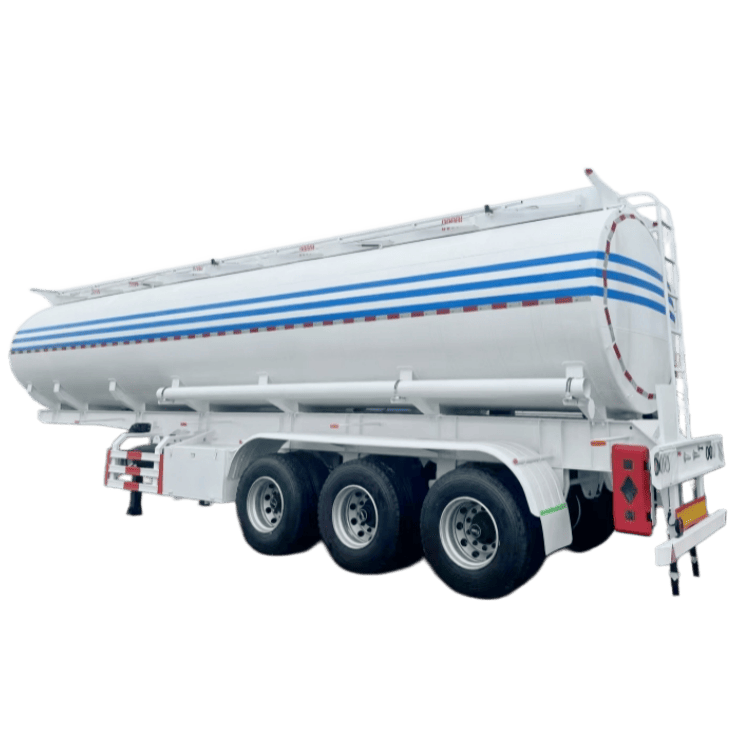
OVERVIEW
Most buyers underestimate the technical complexity of tanker trailer remanufacturing, simply equating repainting and minor valve replacement with qualified renovation. Tanker trailers bear liquid, powder or chemical bulk cargoes, requiring ultra-high sealing performance, pressure resistance and anti-corrosion capability. Long-term loading and unloading operation easily causes tank body corrosion, internal scaling, weld fatigue, pipeline aging and hidden leakage risks. Genuine tanker trailer remanufacturing is a professional, pressure-safe standardized industrial reconstruction process that focuses on structural integrity, tightness recovery and full safety upgrade. This article details the full tanker trailer remanufacturing workflow, covering pre-production safety evaluation, full disassembly, tank body flaw detection, anti-corrosion renewal, pipeline and valve overhaul, pressure testing and final certification, helping global buyers distinguish certified reman tanker trailers from low-quality refurbished units with hidden safety hazards.
TABLE OF CONTENTS
- Step 1: Pre-Production Tanker Inspection & Safety Qualification Evaluation
- Step 2: Complete Full-Trailer Disassembly & Deep Cleaning
- Step 3: Tank Body Structural Repair, Weld Reinforcement & Thickness Restoration
- Step 4: Full Pipeline & Safety Valve System Renewal
- Step 5: Chassis Correction, Suspension Renewal & Structural Optimization
- Step 6: Internal & External Multi-Layer Anti-Corrosion Treatment
- Step 7: Full-System Sealing Debugging & Pressure Calibration
- Step 8: 72-Hour Continuous Pressure & Sealing Endurance Test
- Step 9: Final Safety Inspection, Certification Filing & Delivery
- Core Differences: Reman Tanker Trailer VS Refurbished Tanker Trailer
- About REMAN ROAD: Brand Position, Vision & Core Principles
RELATED ARTICLES | CLICK TO VIEW MORE
- REMAN ROAD Full Trailer Remanufacturing Process
- REMAN ROAD Tanker Trailer Remanufacturing Process
- REMAN ROAD Dump Trailer Remanufacturing Process
- REMAN ROAD Low Bed Trailer Remanufacturing Process
- REMAN ROAD Lowboy Trailer Remanufacturing Process
- REMAN ROAD Flatbed Trailer Remanufacturing Process
- REMAN ROAD Container Trailer Remanufacturing Process
- REMAN ROAD Cargo Trailer Remanufacturing Process
Step 1: Pre-Production Tanker Inspection & Safety Qualification Evaluation
Safety-oriented pre-inspection is the first core step of tanker remanufacturing. Different from ordinary trailers, tankers must pass strict pressure resistance and structural flaw screening to eliminate units with irreparable hidden dangers.
Tank Body Structural Screening:
Fully inspect the overall tank shell, head welding seams, saddle support and connection structure. Eliminate trailers with irreversible bulge deformation, severe metal thinning, penetrating cracks and long-term chemical corrosion that cannot be repaired.
Non-Destructive Flaw Detection:
Adopt professional ultrasonic and magnetic particle testing to detect internal welding cracks, tiny trachoma and fatigue points that cannot be observed by naked eyes, forming a complete tank body safety evaluation report.
Functional System Inspection:
Detect the operating status of safety valves, breathing valves, discharge pipelines, seal gaskets and manhole covers, record aging and leakage failure points, and formulate targeted remanufacturing and replacement plans.
Step 2: Complete Full-Trailer Disassembly & Deep Cleaning
Thorough disassembly and internal & external deep cleaning are essential for tanker trailers. Residual liquid scale, chemical attachments and oil sludge inside the tank will affect subsequent welding, anti-corrosion treatment and pressure test accuracy.
Systematic Component Disassembly:
Completely disassemble all functional accessories including manhole cover assemblies, safety valves, breathing valves, discharge pipelines, control valves, bottom unloading devices and anti-wave baffles, and classify reusable, repairable and mandatory replacement parts.
Internal Tank High-Pressure Cleaning:
Adopt high-pressure water jet cleaning and chemical neutralization treatment to thoroughly remove internal cargo scale, sediment and residual chemical attachments, ensuring the inner wall reaches a clean and bare metal state.
External Sandblasting Derusting:
Perform overall sandblasting on the tank body and chassis to completely remove outer rust layers, aging paint and oxide layers, exposing all external structural defects and welding fatigue points.
Secondary Recheck After Cleaning:
Re-inspect the cleaned tank body and accessories again to confirm hidden corrosion and thinning areas, providing accurate data for subsequent repair and reinforcement.
Step 3: Tank Body Structural Repair, Weld Reinforcement & Thickness Restoration
The tank body is the pressure-bearing core of the tanker trailer. Long-term cargo impact and corrosion easily cause wall thinning, weld aging and local deformation. This process completes precise repair and structural reinforcement to restore pressure-bearing safety.
Local Deformation Straightening:
Use professional hydraulic correction equipment to repair tiny bulges and depressed deformation of the tank body, restoring the overall roundness and flatness of the pressure-bearing shell.
Weld Seam Re-Welding & Reinforcement:
Polish all aging and defective welding seams, remove trachoma and crack defects, and perform multi-layer precise welding reinforcement to ensure weld strength meets pressure-bearing standards.
Wall Thickness Supplement & Reinforcement:
For locally thinned tank walls caused by long-term corrosion, adopt plate lining reinforcement and repair processes to restore the original design thickness and pressure resistance.
Anti-Wave Baffle Reinstallation & Fixing:
Reinforce and fix loose or deformed internal anti-wave baffles to prevent liquid impact vibration during high-speed driving and protect tank body structural stability.
Step 4: Full Pipeline & Safety Valve System Renewal
Pipeline aging and seal failure are the most common leakage causes of old tanker trailers. REMAN ROAD Certified tanker trailer remanufacturing implements full standard renewal of vulnerable safety components to eliminate leakage risks fundamentally.
Full Pipeline Replacement:
Remove all aging metal pipelines and rubber hoses, and replace them with high-pressure, corrosion-resistant standard pipelines to ensure smooth internal and external material transmission and no pressure loss.
Core Safety Accessories Renewal:
Mandatorily replace safety valves, breathing valves, manhole cover seals, discharge valves and quick-release joints to restore original sealing precision and safety protection performance.
Sealing System Overall Upgrade:
Replace all aging rubber gaskets and sealing rings with oil-resistant, corrosion-resistant and high-temperature-resistant sealing materials to adapt to long-term liquid and powder loading and unloading scenarios.
Operation Mechanism Debugging:
Calibrate the opening and closing sensitivity of unloading valves and control switches to ensure flexible operation, accurate cutoff and no residual leakage.
Step 5: Chassis Correction, Suspension Renewal & Structural Optimization
The tanker chassis bears the full weight of the tank body and full-load cargo. Long-term heavy-load operation easily causes beam deformation and suspension fatigue. Professional tanker trailer remanufacturing restores chassis stability and load balance.
Frame Straightening & Calibration:
Precisely correct deformed main beams and saddle supporting structures to ensure horizontal balance of the tank body and avoid unilateral stress concentration.
Suspension & Axle System Renewal:
Replace aging leaf springs, shock absorbers, axle bearings and brake components to restore uniform load-bearing and stable driving performance.
Support Structure Reinforcement:
Reinforce the welding connection between the saddle support and the tank body to prevent structural cracking caused by long-term vibration and heavy load.
Step 6: Internal & External Multi-Layer Anti-Corrosion Treatment
Anti-corrosion treatment is the key process to extend the service life of tanker trailers. Different from ordinary trailers, tankers need dual internal and external anti-corrosion protection adapted to liquid corrosion environments.
Inner Wall Special Anti-Corrosion Coating:
Adopt food-grade or chemical-resistant anti-corrosion coatings for the inner tank wall, with multi-layer brushing and curing treatment to isolate cargo corrosion and prevent scaling and oxidation.
Outer Wall Protective Spraying:
Apply anti-rust primer, intermediate anti-corrosion paint and weather-resistant finish paint layer by layer on the outer tank body and chassis to form a dense anti-aging protective layer.
Key Area Enhanced Protection:
Strengthen anti-corrosion treatment on welding seams, saddle contact surfaces and pipeline interfaces that are prone to corrosion, avoiding local rust penetration and structural damage.
Step 7: Full-System Sealing Debugging & Pressure Calibration
After structural repair and accessory assembly, overall sealing debugging and pressure calibration are carried out to ensure the REMAN ROAD remanufactured tanker trailer meets industrial safety standards for full-load transportation.
Full-Link Sealing Inspection:
Check the sealing performance of manhole covers, valves, pipeline interfaces and welds one by one to eliminate micro-leakage points.
System Pressure Calibration:
Debug safety valve opening pressure and breathing valve induction sensitivity to ensure automatic pressure relief and balance protection inside the tank.
Whole-Vehicle Levelness Adjustment:
Calibrate the overall horizontal level of the tanker to ensure uniform internal liquid pressure distribution and avoid local overload stress.
Step 8: 72-Hour Continuous Pressure & Sealing Endurance Test
Long-cycle pressure holding and sealing testing is the core safety verification standard for remanufactured tanker trailers, simulating long-distance transportation and variable pressure working conditions to eliminate hidden dangers.
Static Pressure Holding Test:
Fill the tank with medium and carry out long-term pressure holding test to detect weld tightness and tank body pressure resistance, ensuring no deformation or leakage under rated working pressure.
Dynamic Vibration Simulation Test:
Simulate bumpy road transportation and liquid sloshing working conditions to verify the stability of internal baffles, pipelines and sealing structures.
72-Hour Continuous Monitoring:
Real-time monitor pressure changes and sealing status to eliminate intermittent leakage faults that cannot be detected by short-term testing.
Step 9: Final Safety Inspection, Certification Filing & Delivery
Strict final safety inspection and standardized filing ensure every REMAN ROAD remanufactured tanker trailer has complete traceable quality and safety certification qualifications.
Full-Indicator Safety Re-Inspection:
Recheck reman tanker trailer tank body pressure resistance, weld quality, overall sealing performance, safety valve sensitivity and chassis stability to meet national and industrial transportation safety standards.
Complete Process Record Filing:
Sort out non-destructive testing reports, component replacement lists, pressure test data and anti-corrosion records to form independent safety quality files for each REMAN ROAD reman tanker trailer.
Fine Finishing & Standard Delivery:
Complete overall cleaning and safety marking, and deliver complete certification documents, test reports and after-sales warranty instructions.
Core Differences: Reman Tanker Trailer VS Refurbished Tanker Trailer
The essential gap between REMAN ROAD certified remanufactured tanker trailers and ordinary refurbished units lies in safety restoration and pressure sealing standard, which directly determines transportation safety and long-term service life.
Safety Detection Standard:
- REMAN ROAD tanker trailer remanufacturing includes full non-destructive flaw detection and pressure holding testing;
- ordinary refurbishment only performs simple water leakage inspection, retaining hidden welding crack risks.
Component Renewal Scope:
- REMAN ROAD tanker trailer reman fully replaces aging safety valves, pipelines and sealing systems;
- cheap refurbishment only repairs faulty parts, resulting in frequent leakage failures.
Anti-Corrosion Level:
- REMAN ROAD tanker trailer reman adopts dual internal and external professional anti-corrosion treatment;
- ordinary refurbishment only sprays outer paint without internal protection, causing rapid internal corrosion and scaling.
Pressure Safety Performance:
- REMAN ROAD Reman tanker trailer tank body restores standard pressure resistance and structural stability;
- refurbished tankers have uneven wall thickness and hidden fatigue, easily causing safety accidents under full load.
Long-Term Operational Safety:
- REMAN ROAD Certified reman tanker trailers maintain stable sealing and anti-corrosion performance for years;
- refurbished tankers suffer recurring leakage and corrosion problems in daily transportation.
About REMAN ROAD: Brand Position, Vision & Core Principles
Understand REMAN ROAD’s brand positioning, long-term industry vision and unchanging core standards that separate us from ordinary refurbished workshops.
Core Brand Positioning: Trusted Middle Link For Heavy-Duty Reman Assets
We aim to become the global trusted credibility channel for heavy asset remanufacturing. Our core value lies in linking suppliers and worldwide mining & logistics fleets with unified quality supervision and transparent standards, instead of positioning ourselves as a single production workshop.
Long-Term Brand Vision
To standardize the disordered heavy-duty reman market globally via reliable credibility channels, eliminate low-quality superficial rebuild chaos, and provide risk-free, cost-effective heavy transport asset trading channels for all international contractors.
Three Core Operating Principles
We uphold full transparency of all reman records, unified global quality control standards, and long-term win-win partnership value, never prioritizing one-time short sales profit over buyer trust.