Why Genuine Truck Remanufacturing Starts With Cleaning, Not Assembly?
Intro
It is easy to mistake genuine truck remanufacturing for a reverse assembly process. Some informal rebuilders tear down a truck, swap out obvious broken parts and start bolting everything back together. They skip deep cleaning, treating it as extra cosmetic work that adds cost and time.
For REMAN ROAD genuine truck remanufacturing, cleaning is the first critical technical phase. All components must be stripped of grease, sludge, rust scale and surface contaminants before inspection. You cannot accurately measure wear or reliably detect hidden cracks when parts are still covered in accumulated service grime.
Contaminants mask the critical inspection points
Heavy truck components operate in harsh environments: mine dust, road grit, high-temperature oil carbon and corrosive brine. A thin layer of oil sludge can cover micro-fatigue cracks on frame brackets, crankshafts and weld joints. Surface rust scale hides material thinning and corrosion pits. Magnetic particle and ultrasonic NDT testing only work reliably on clean metal surfaces.
If inspectors scan dirty parts, test results become unreliable. Defects may be missed, and high-risk components incorrectly marked as reusable. Cleaning removes this interference and creates a clear, consistent inspection baseline.
Cleaning reveals hidden wear and dimensional drift
After cleaning, technicians perform precision measurement on bearings, journals, gear teeth and sealing surfaces. Sludge buildup can artificially fill worn grooves, making a degraded part look within tolerance. Once the contamination is removed, actual clearances, surface pitting and wear patterns become visible.
This genuine truck remanufacturing step separates parts that can be reused from those that need replacement. Without cleaning, the sorting decision is based on guesswork, not accurate metrology.
Different components follow matched cleaning protocols
REMAN ROAD uses targeted cleaning methods for different parts, to avoid damaging the base material. Hard structural steel frames go through controlled blasting that removes scale without inducing new surface stress. Engine and driveline parts use chemical degreasing and high-pressure washing to strip carbon deposits. Sensitive electronic and sensor components use gentle, low-abrasion cleaning processes.
The genuine truck remanufacturing goal is to remove contaminants, not alter the part’s original geometry or material properties. Aggressive, improper cleaning can create new surface defects and invalidate the core.
Cleaning supports traceability and documentation
Clean components produce clear, consistent photos and scan data for the VIN traceability log. Inspectors can capture sharp images of defect zones, measurement marks and repair areas. These records are shared with procurement and fleet teams before shipment.
Dirty parts produce blurry, ambiguous documentation that cannot support audit or warranty claims later. Cleaning is therefore a foundational requirement for the transparent audit trail that defines genuine truck remanufacturing.
Cleaning is not the same as cosmetic detailing
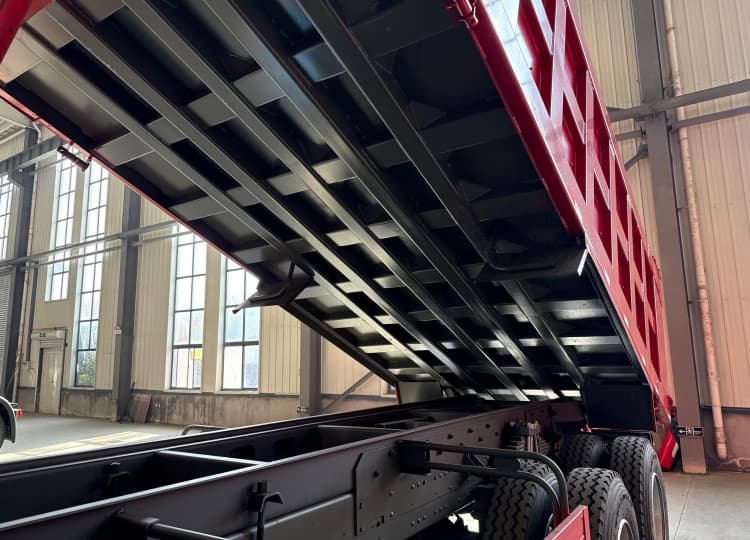
This is a frequent source of confusion. Cosmetic detailing only cleans cab surfaces, wheels and exterior panels for better photos. Genuine truck remanufacturing engineering cleaning reaches every disassembled component, deep inside the chassis, engine block and differential housing.
Its purpose is inspection, not appearance. A truck can look shiny and clean on the outside while still carrying uninspected, dirty internal components. That is not genuine truck remanufacturing.
The workflow sequence makes the logic clear
Genuine truck remanufacturing step sequence: Full disassembly → systematic cleaning → NDT & dimensional inspection → sorting (reuse / renew / scrap) → controlled reassembly.
Informal rebuild sequence: Fault identification → part swap → quick wipe → reassembly. Cleaning sits right between teardown and inspection. It is the gateway that makes all subsequent engineering checks valid. Skipping it collapses the whole quality control system.
Final Takeaway
Genuine truck remanufacturing starts with cleaning because inspection cannot be trusted on contaminated metal. Cleaning is an engineering prerequisite, not a cosmetic extra. For fleet leaders, the key takeaway is simple: if a “reman” build skips deep component cleaning before inspection, you cannot trust its test results.