
REMAN ROAD Truck Transmission Remanufacturing Process
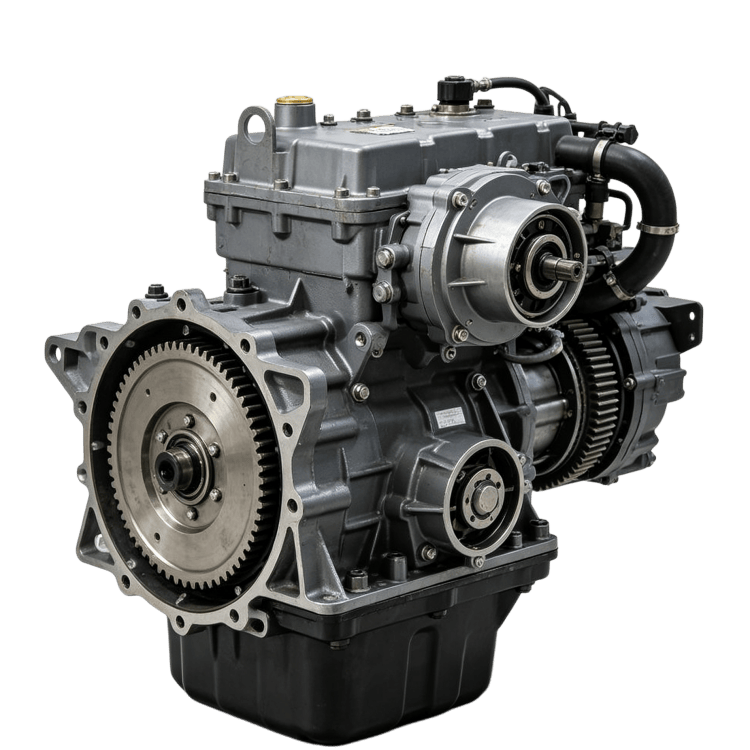
REMAN TRUCK TRANSMISSION OVERVIEW
REMAN ROAD heavy-duty truck transmission remanufacturing strictly follows industrial OEM standards, implementing a complete closed-loop restoration workflow including pre-inspection, full disassembly, deep industrial cleaning, precision gear and shaft machining, full consumable renewal, standardized reassembly and professional bench testing. Different from simple surface refurbishment that only fixes obvious faults, our process targets hidden gear fatigue, shaft deformation, clearance deviation and internal oil passage blockage. All REMAN ROAD remanufactured transmission assemblies recover near-new shifting accuracy, power transmission efficiency and long-term heavy-load durability, providing high-cost-performance and stable replacement solutions for global heavy-haul fleets.
TABLE OF CONTENTS
- Step 1: Pre-Remanufacturing Full Transmission Inspection & Fault Evaluation
- Step 2: Complete Full Disassembly & Systematic Parts Classification
- Step 3: Deep Industrial Cleaning & Oil Sludge Removal
- Step 4: Precision Machining & Structural Fatigue Repair
- Step 5: Full Consumable Renewal & Functional Calibration
- Step 6: Standardized OEM-Level Reassembly
- Step 7: Bench Running-In & Full-Condition Endurance Test
- Step 8: Surface Treatment & Final Quality Inspection
- Core Differences: Reman Truck Transmission VS Refurbished Truck Transmission
- About REMAN ROAD: Brand Position, Vision & Core Principles
RELATED ARTICLES | CLICK TO VIEW MORE
Step 1: Pre-Remanufacturing Full Transmission Inspection & Fault Evaluation
Comprehensive pre-detection is the foundation of accurate truck transmission remanufacturing. We fully capture external faults and internal hidden defects of the old transmission, and formulate targeted restoration schemes to ensure standardized and purposeful repair.
Dynamic Shifting Performance Test:
Detect real working status including shifting smoothness, gear engagement sensitivity, power transmission stability and gear slipping phenomenon. Record common faults such as shifting jitter, difficult gear engagement, transmission lag and abnormal noise under load.
Core Component Precision Measurement:
Use professional measuring tools to detect gear tooth wear degree, main shaft and counter shaft straightness, synchronizer clearance and bearing fit tolerance, screen deformed and fatigued workpieces that need precision correction.
Internal Structure & Oil Circuit Inspection:
Check gearbox oil passages, lubrication channels and sealing surfaces for oil sludge blockage, carbon deposition and oil leakage. Inspect the wear status of clutch components and locking structures to classify faulty parts.
Component Classification & Reman Plan Formulation:
Classify all transmission parts into reusable machinable workpieces, repairable components and mandatory replacement wearing parts, and confirm repair and renewal standards in accordance with OEM technical parameters.
Step 2: Complete Full Disassembly & Systematic Parts Classification
Complete full disassembly breaks the limitation of partial maintenance. It fully exposes internal wear, metal fatigue and invisible structural defects of the gearbox, realizing comprehensive fault elimination.
100% Full Disassembly:
Thoroughly disassemble all internal and external components of the transmission without omission, including gears, shafts, synchronizers, bearings, clutch accessories and housing parts. Ensure no hidden defective structure remains untreated.
Scientific Parts Classification:
Retain core metal workpieces such as gearbox housing, main shaft, counter shaft and gear sets for precision machining and fatigue repair. Uniformly scrap and replace aging bearings, oil seals, gaskets, synchronizer rings and vulnerable accessories with brand-new matched parts.
Step 3: Deep Industrial Cleaning & Oil Sludge Removal
Long-term gear meshing and high-load operation produce a large amount of oil sludge, metal powder and carbon deposits inside the gearbox, blocking lubrication channels and covering tiny wear defects. Truck transmission remanufacturing Industrial deep cleaning restores bare metal state for accurate repair.
Multi-Mode Industrial Cleaning:
Adopt ultrasonic cleaning, high-pressure jet flushing and professional decontamination technology to thoroughly remove oil sludge, metal powder and oxide attachments on all gears, shafts and shell workpieces.
Lubrication Pipeline & Cavity Decontamination:
Clean all internal lubrication oil passages, heat dissipation grooves and assembly gaps to eliminate blockages. Fully expose tiny abrasion, tooth surface damage and structural deformation for subsequent precision calibration.
Step 4: Precision Machining & Structural Fatigue Repair
This truck transmission remanufacturing core procedure eliminates invisible metal fatigue and structural deformation caused by long-term heavy-load torque impact, restoring the gearbox’s factory-level transmission precision.
Shaft Straightening & Polishing:
Calibrate bent and deformed main shafts and counter shafts, polish shaft journals to eliminate surface scratches and wear, restore standard straightness and ensure stable gear meshing.
Gear Tooth Surface Repair & Correction:
Grind and repair worn gear tooth surfaces, correct meshing clearance deviation, eliminate tooth surface fatigue and pitting, and avoid gear slipping and abnormal meshing noise.
Synchronizer & Locking Structure Calibration:
Repair and calibrate synchronizer assemblies, restore standard friction clearance and locking accuracy, solving difficult shifting and gear jumping faults.
Housing Correction:
Detect and correct deformed gearbox housing mounting surfaces to ensure overall assembly flatness and structural stability.
Step 5: Full Consumable Renewal & Functional Calibration
Aging vulnerable parts are the main cause of repeated gearbox faults. Full renewal of consumables and systematic functional calibration ensure stable and coordinated operation of the entire transmission system.
Full Vulnerable Parts Renewal:
Completely replace all aging bearings, oil seals, gaskets, synchronizer rings, snap rings and buffer accessories with OEM-matched brand-new parts, no old aging components reused.
Transmission Function Calibration:
Pre-calibrate gear meshing clearance, synchronizer response sensitivity and clutch matching degree to ensure accurate power transmission, stable torque output and smooth shifting transition.
Step 6: Standardized OEM-Level Reassembly
Strict standardized reman truck gearbox assembly avoids secondary assembly errors and hidden structural faults, ensuring all internal components match factory precision parameters.
Standard Torque & Clearance Control:
Assemble components strictly in accordance with OEM assembly sequence and torque standards. Precisely control gear meshing gap, shaft end play and synchronizer clearance with professional calibrated tools.
Full Sealing & Standard Installation:
Install all sealing gaskets and oil seal accessories in place to completely eliminate oil leakage risks. Record the whole reman truck transmission assembly process to achieve standardized and traceable installation.
Step 7: Bench Running-In & Full-Condition Endurance Test
Professional remanufactured transmission bench testing is the key difference between industrial remanufacturing and ordinary refurbishment, verifying the gearbox’s heavy-load durability and overall stability.
Graded Speed Running-In Test:
Complete no-load, low-speed, medium-speed and full-load graded running-in on a dedicated transmission test bench to simulate real truck shifting scenarios.
Full-Parameter Performance Monitoring:
Real-time detect shifting smoothness, torque transmission stability, meshing noise and oil tightness. Eliminate gear slipping, shifting jitter, abnormal noise and slight leakage to ensure reliable heavy-duty operation.
Step 8: Surface Treatment & Final Quality Inspection
Standard reman truck transmission surface protection improves component durability, while full-index final inspection ensures qualified quality and complete quality traceability.
Rust Removal & Anti-Corrosion Treatment:
Perform overall surface rust removal and fine polishing, then apply professional anti-corrosion and wear-resistant coating to extend reman truck gearbox service life.
Final Inspection & File Recording:
Recheck all assembly details and test data, establish independent quality traceability files for each remanufactured transmission, supporting formal after-sales warranty service.
Core Differences: Reman Truck Transmission VS Refurbished Truck Transmission
Truck transmission remanufacturing and ordinary refurbishment are two completely different restoration modes. The three core differences determine the transmission’s heavy-load safety, shifting stability and long-term service life.
Process & Restoration Depth:
- REMAN ROAD Industrial truck transmission remanufacturing adopts full disassembly, deep sludge removal, precision gear and shaft machining and full consumable renewal, completely eliminating hidden metal fatigue and structural clearance deviation.
- Ordinary refurbishment only replaces visibly broken parts and cleans surface dirt, retaining deep internal defects that cause repeated shifting faults.
Performance & Heavy-Load Safety:
- Remanufactured transmissions restore OEM-level gear meshing precision and torque transmission efficiency, passing strict full-load bench tests to adapt to long-term heavy-haul impact loads.
- Refurbished transmissions have disordered internal matching tolerances, prone to gear slipping, shifting failure and abnormal noise under continuous heavy load, bringing driving safety hazards.
Durability & Quality Guarantee:
- Reman truck transmissions eliminate all structural fatigue risks with full new vulnerable parts, achieving near-new service life and stable performance, with complete test records and formal warranty support.
- Refurbished transmissions reuse a large number of aging core and sealing parts, featuring fast wear, high failure rate and no standardized quality guarantee, increasing fleet maintenance costs.
About REMAN ROAD: Brand Position, Vision & Core Principles
Understand REMAN ROAD’s brand positioning, long-term industry vision and unchanging core standards that separate us from ordinary refurbished workshops.
Core Brand Positioning: Trusted Middle Link For Heavy-Duty Reman Assets
We aim to become the global trusted credibility channel for heavy asset remanufacturing. Our core value lies in linking suppliers and worldwide mining & logistics fleets with unified quality supervision and transparent standards, instead of positioning ourselves as a single production workshop.
Long-Term Brand Vision
To standardize the disordered heavy-duty reman market globally via reliable credibility channels, eliminate low-quality superficial rebuild chaos, and provide risk-free, cost-effective heavy transport asset trading channels for all international contractors.
Three Core Operating Principles
We uphold full transparency of all reman records, unified global quality control standards, and long-term win-win partnership value, never prioritizing one-time short sales profit over buyer trust.